GlitterBeam
Radio on every screen
GlitterBeam is a Multiregional radio station, and this was the whole estate: the UK and Italian websites, native apps for iPhone and Android, in-car experiences for CarPlay and Android Auto, and a Fire TV app, with Apple TV on the way. Every platform is genuinely native to its home (a headless Next.js frontend on the web, SwiftUI on iOS, Kotlin and Jetpack Compose on Android and Fire TV) yet they all share one live backend and one neon, synthwave-tinged identity. A single codebase serves both stations on each platform, so GlitterBeam UK and GlitterBeam Italia stay in step without maintaining two of everything. It was, quite simply, a joy to build: a brand with real character and a client who trusted the craft.
The brief was reach without compromise: one brand that shows up wherever people listen (at the desk, in a pocket, in the car, in the living room) across two countries, and feels genuinely native on each. Not a stretched-thin web wrapper but a complete, credible product. A single codebase per platform, serving both stations, keeps the cost of running two countries low and future features cheap to ship, so GlitterBeam launches as a coherent whole rather than a website with an app bolted on.
Stack & architecture
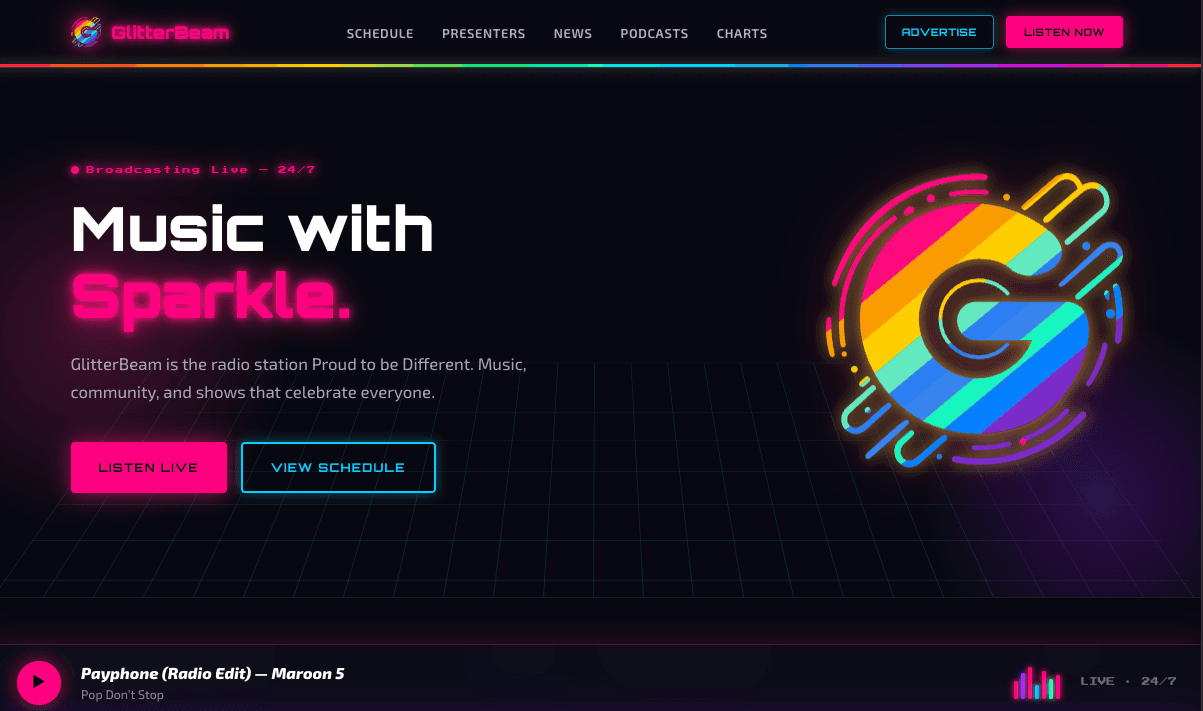
I built the whole estate end to end: a headless Next.js frontend for the UK and Italia sites, native SwiftUI on iOS, Kotlin and Jetpack Compose on Android and Fire TV, all sharing one live backend. A single codebase per platform serves both stations, with language, timezone, streams, branding and even the localised URLs switching from one setting.
Native on every platform
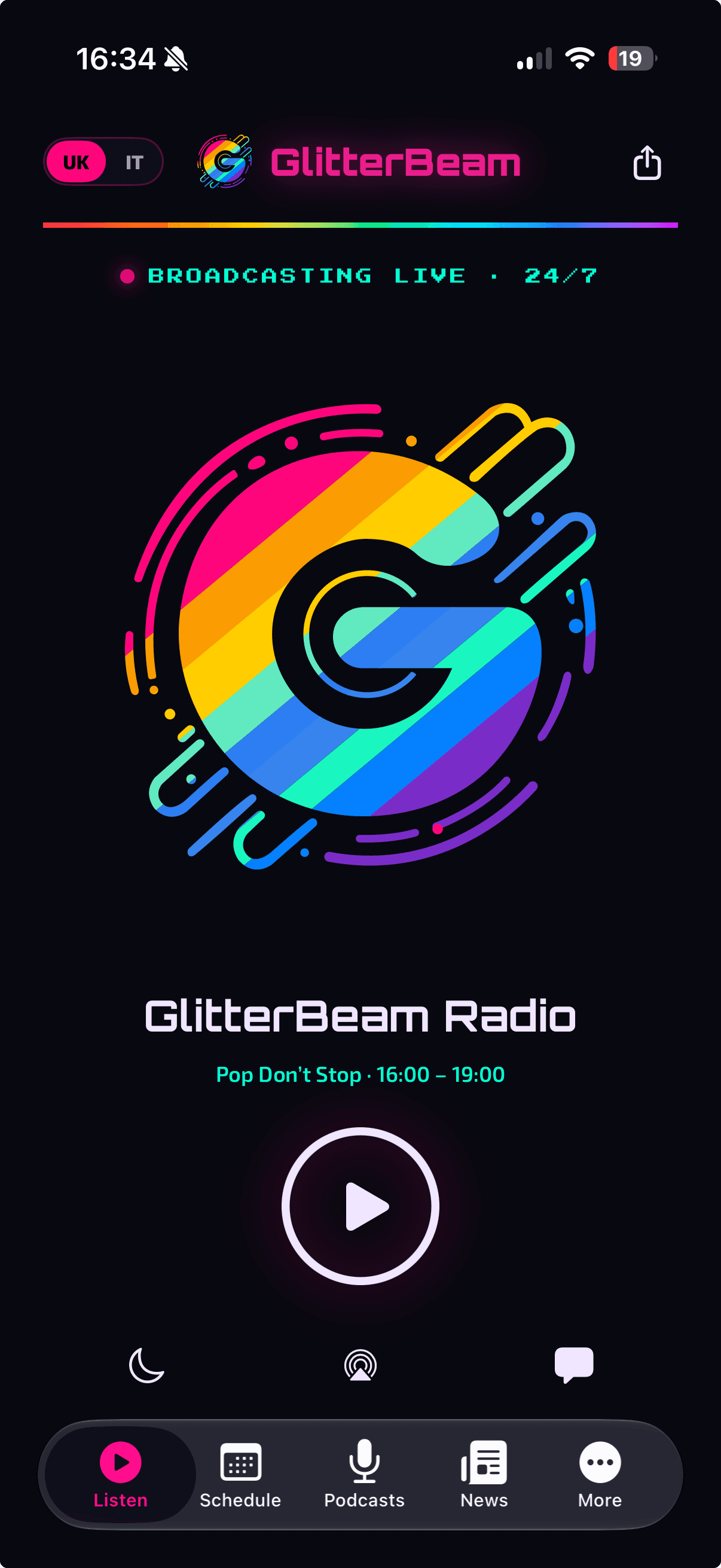
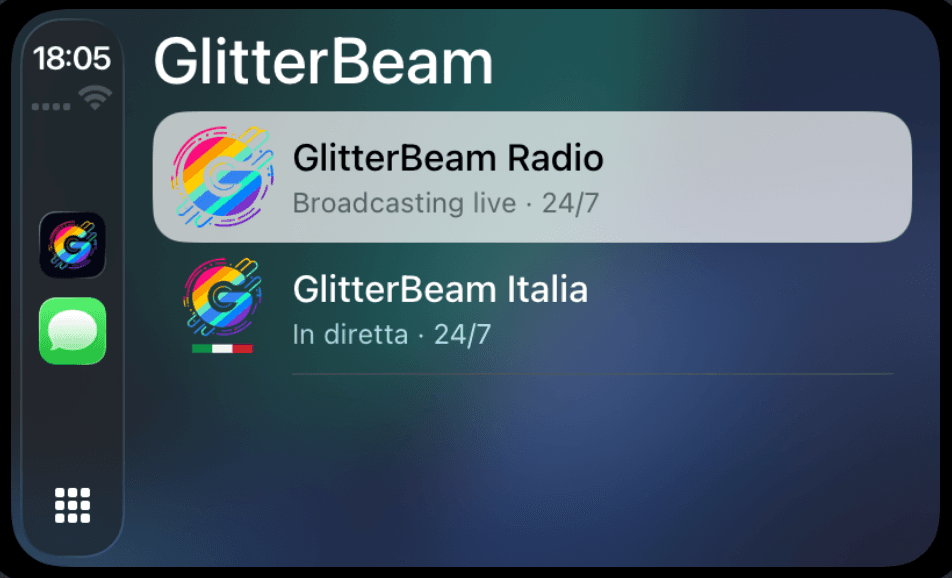
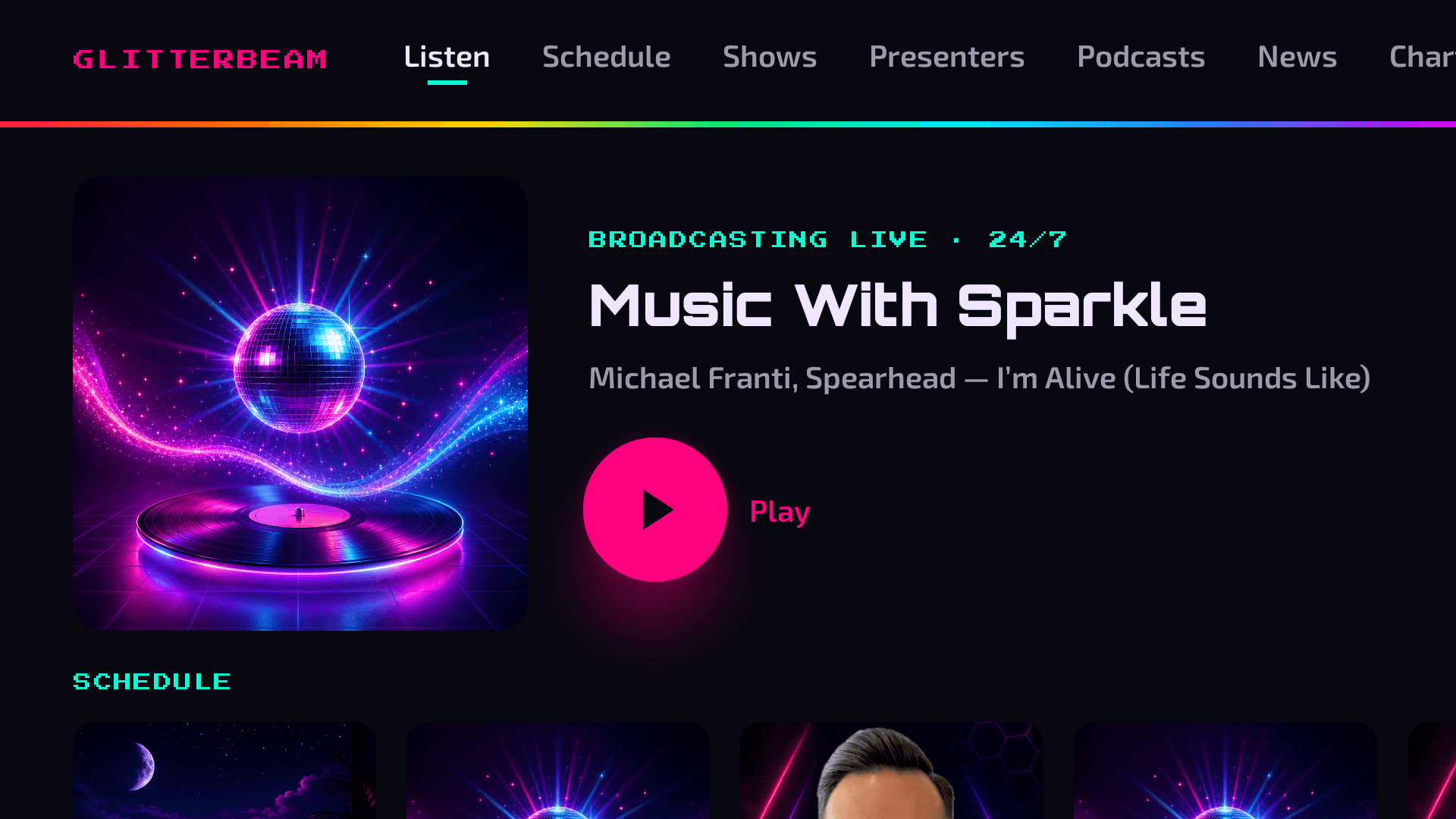
Each surface is native to its home rather than ported: CarPlay and Android Auto for the car, a 10-foot D-pad interface on Fire TV that reuses the Android core, and lock-screen and background-audio behaviour that matches what listeners expect on each OS.
Audio engine & polish
One audio engine per app drives live streaming and podcast playback, handling interruptions, headphones, calls and hand-off to car and TV. Podcast files that only live inside the web player’s markup are resolved on demand, so episodes play everywhere the station does.
Every screen, one brand
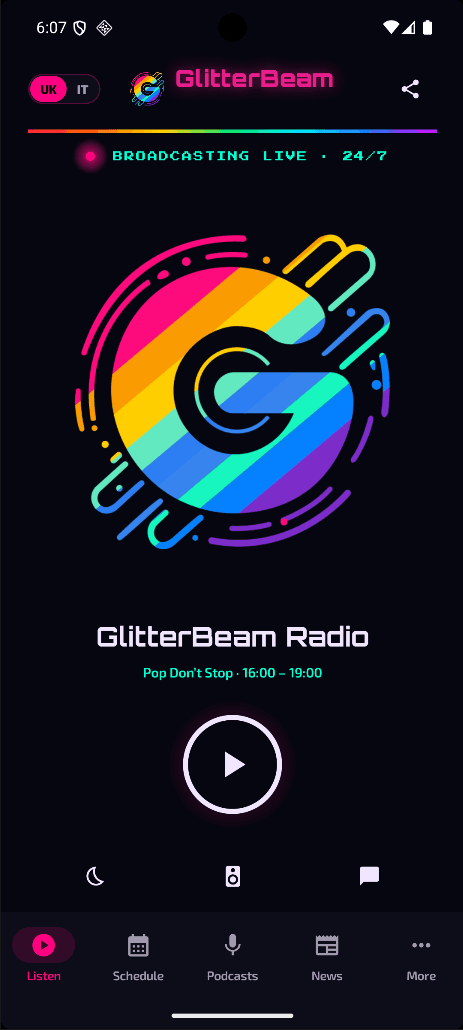
Websites for the UK and Italia, native iOS and Android apps, CarPlay and Android Auto for the car, and a Fire TV app for the living room, with Apple TV in progress. Each is built native to its platform, so it feels right at home rather than ported.
Two stations, one codebase
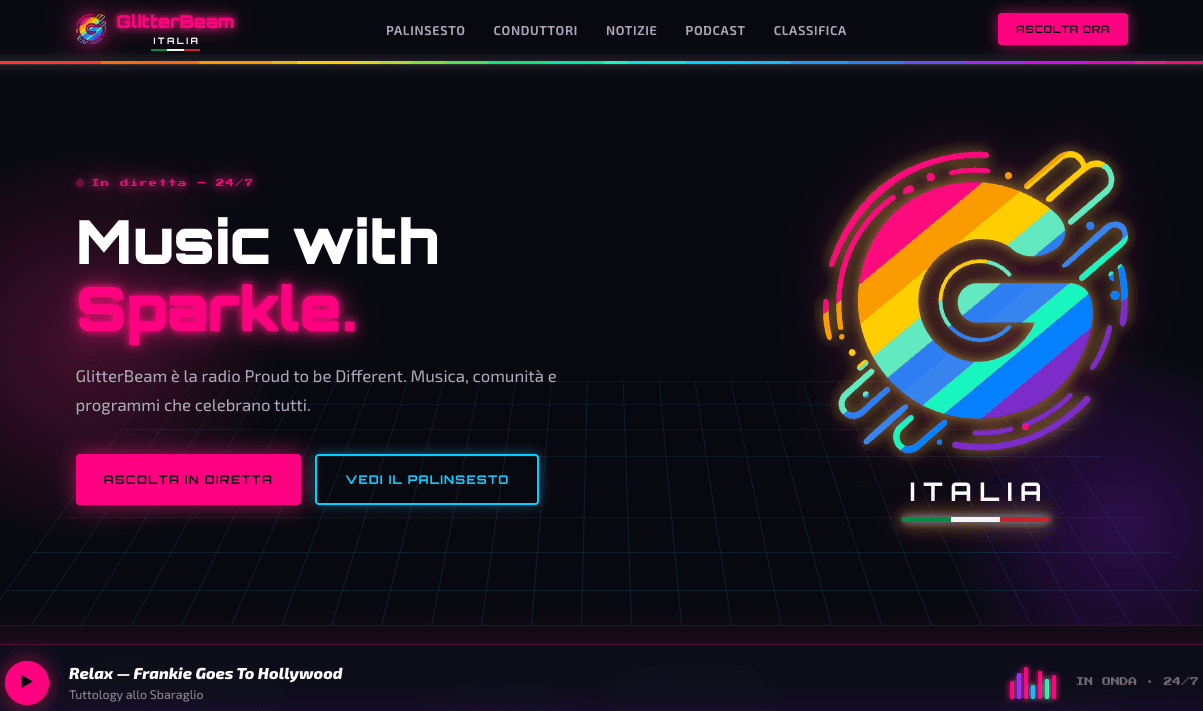
GlitterBeam UK and GlitterBeam Italia run from a single codebase per platform: language, timezone, streams, branding and even the localised URLs all switch from one setting. New features land on both stations at once.
Radio that behaves like radio
One audio engine per app drives live streaming and podcast playback with proper background audio, lock-screen controls, and hand-off to the car and TV. Calls, headphones and interruptions are all handled the way listeners expect.
On the web
In your pocket
In the car, and on the big screen
Palette
Typography
A chunky, arcade-styled display face carries show titles and the wordmark; a clean sans handles body and interface; a pixel mono is reserved for the broadcast labels (BROADCASTING LIVE, 24/7), grounding the neon in a retro-radio signal.
Signature details
- The rainbow G mark and a synthwave grid-floor horizon carry across web, phone, car and TV, so every surface reads as one station.
- A pixel-mono broadcast tag (BROADCASTING LIVE · 24/7) is the one constant chrome, present on every screen.
- Now-playing artwork falls back to the station’s own show art via a no-track-art mode: clean, on-brand and copyright-safe.
- One neon identity flexes per country: the UK wordmark and the tricolour-tinted Italia lockup share the same system.
- Podcast audio isn’t in the radio station’s API: the MP3s live on cloud storage and only appear inside the web player’s markup. The apps resolve each episode’s real file on demand, carefully picking the right track out of a page that lists several.
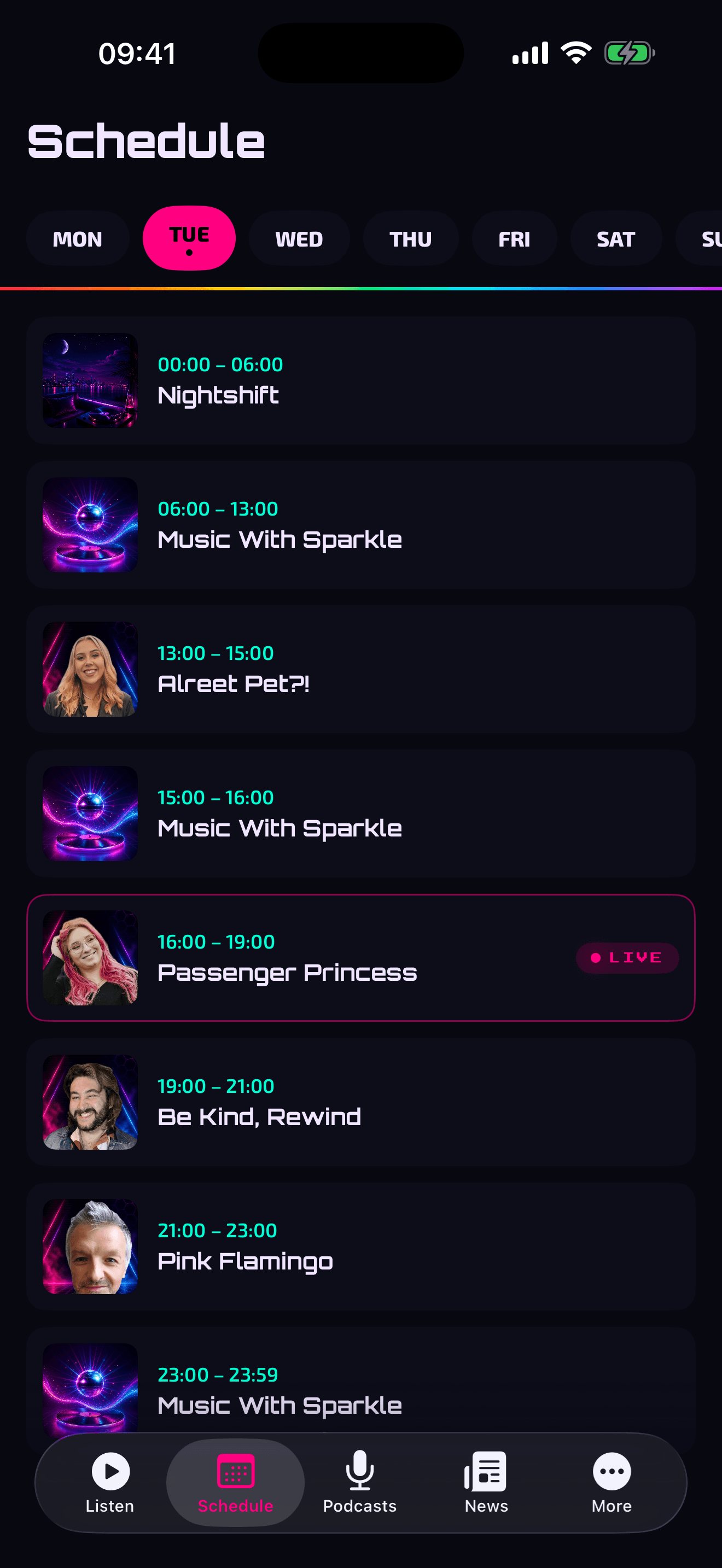
- Radio schedules wrap past midnight: a show can run 22:00 to 01:00. “What’s on now” has to treat that slot as still live after midnight, which naive time logic gets wrong.
- Fire TV reuses the entire Android core and rebuilds only the 10-foot, D-pad interface, a UI port rather than a rewrite, so both apps stay in sync from one shared engine.
- The original Android release signing key had been lost. The update was only shippable because Google Play App Signing was switched on, a good reminder that the recovery plan matters as much as the release.
Like what you see?
I’m available for freelance work. Let’s build something together.